

Navigating the Aftermath: Why Truck Accidents in Atlanta Are More Complex Than Car Accidents
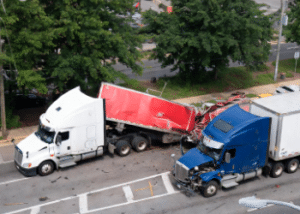 Atlanta is a bustling hub of commerce, anchored by a network of interstates that serve as the lifeblood of the Southeastern economy. However, the same corridors that drive our growth—I-75, I-85, and the infamous I-285 perimeter—also play host to some of the most devastating collisions on the road. When a standard passenger vehicle is involved in a crash, the legal path is often straightforward. But when a commercial vehicle is involved, the complexity increases exponentially.
Understanding why these cases are so unique requires looking beyond the dented metal. From the sheer physics of the impact to the labyrinth of federal regulations, truck accidents demand a level of legal precision that standard car accidents do not. For those seeking justice, partnering with an experienced truck accident lawyer in Atlanta is not just a recommendation; it is often a necessity for navigating these high-stakes claims.
1. The Physics of Catastrophe: Size and Weight Disparity
The most immediate difference between a car and a truck accident is the scale of the damage. According to the Georgia Department of Transportation (GDOT), a fully loaded tractor-trailer can weigh up to 80,000 pounds. In contrast, the average passenger car weighs roughly 4,000 pounds.
This 20-to-1 weight ratio means that even low-speed collisions can result in life-altering injuries for those in smaller vehicles. Common outcomes include traumatic brain injuries (TBIs), spinal cord damage, and complex fractures. Because the medical stakes are so high, the financial recovery must account for not just immediate bills, but decades of future care.
2. A Web of Liability: Who is Truly Responsible?
In a typical car accident, you are usually dealing with one other driver and their insurance company. In a commercial truck accident, the “at-fault” party is rarely just the person behind the wheel. Liability can be shared among several entities, including:
- The Trucking Company: Under the doctrine of respondeat superior, employers are often liable for the negligence of their drivers.
- Maintenance Providers: If a brake failure or tire blowout caused the crash, the third-party company responsible for inspections may be held to account.
- Cargo Loaders: Improperly secured freight can lead to “jackknife” accidents or shifting loads that make a truck impossible to control.
- Manufacturers: Defective parts can turn a routine trip into a deadly event.
Investigating these layers requires a lawyer who understands the corporate structures of the logistics industry. Darren Tobin, a highly-rated personal injury attorney, has built a reputation on his ability to aggressively pursue these multiple avenues of recovery, ensuring no stone is left unturned in the search for accountability.
3. The Regulatory Maze: FMCSA and Georgia State Law
Trucking is one of the most heavily regulated industries in the United States. Commercial drivers must adhere to strict Federal Motor Carrier Safety Administration (FMCSA) guidelines, as well as specific rules set by the Georgia Governor’s Office of Highway Safety.
Complexity arises when an accident investigation reveals violations of these rules, such as:
- Hours of Service (HOS): Federal law dictates exactly how many hours a driver can be on the road before they must rest. Fatigued driving is a leading cause of Atlanta truck accidents, often spurred by companies pushing drivers to meet unrealistic deadlines.
- Maintenance Logs: Trucks must undergo rigorous periodic inspections. If a company skips these to keep a truck on the road, it constitutes gross negligence.
- Drug and Alcohol Testing: Commercial drivers are held to a much stricter Blood Alcohol Content (BAC) limit (0.04%) than standard drivers.
Proving a violation of these regulations requires a deep dive into “Black Box” data (the Electronic Control Module) and digital driver logs—evidence that trucking companies are sometimes quick to “lose” if a lawyer does not act fast to preserve it.
4. Atlanta’s Unique Infrastructure Challenges
Atlanta is home to some of the nation’s worst “truck bottlenecks.” Locations like Spaghetti Junction (where I-285 meets I-85) and the I-20/I-285 interchange are notorious for congestion and high-frequency collisions. The Atlanta Regional Commission frequently tracks these hotspots, noting that the combination of heavy freight traffic and rapid urban sprawl creates a “perfect storm” for accidents.
When an accident occurs in these high-traffic areas, variables like road construction, merging patterns, and signage visibility all become part of the legal equation. A local attorney who knows these roads—and the specific hazards they present—is better equipped to reconstruct the scene of the accident.
5. The Battle Against “Goliath” Insurance Policies
Commercial insurance policies are significantly larger than personal ones, often reaching into the millions of dollars. While this is good news for victims with catastrophic injuries, it means the insurance companies will fight ten times harder to avoid a payout.
Within hours of a major crash, a trucking company’s “Rapid Response Team” is often at the scene, collecting evidence to minimize their liability. To counter this, victims need a legal team that can match that intensity. Darren Tobin is known for his meticulous approach to case preparation, treating every client with the personal attention of a small firm while wielding the resources of a major litigation powerhouse.
6. Complex Evidence: Beyond the Police Report
A car accident might be settled with a police report and a few photos. A truck accident case requires a mountain of technical data:
- Electronic Logging Device (ELD) Data: To check for HOS violations.
- In-Cab Video: Many modern fleets use dashcams that record driver behavior.
- Weight Station Records: To see if the truck was overloaded at its last check.
- Personnel Files: To see if the driver had a history of safety violations or lacked proper training.
Why Superior Experience Matters
If you or a loved one has been involved in a collision with a commercial vehicle, the clock is ticking. Evidence can disappear, and trucking companies will quickly move to protect their interests. Because these cases involve high-level physics, complex corporate law, and strict federal oversight, they are inherently more complex than any standard car accident.
Navigating this journey requires a guide who understands the local landscape of Atlanta and the global regulations of the trucking industry. By enlisting an expert Atlanta truck accident lawyer, you ensure that the complexities of the law work for you, not against you. Don’t let a corporate legal team dictate the value of your recovery; take the first step toward justice with a firm that knows how to win.